
Understanding Scam Phone Calls (Vishing) Targeting WA Seniors

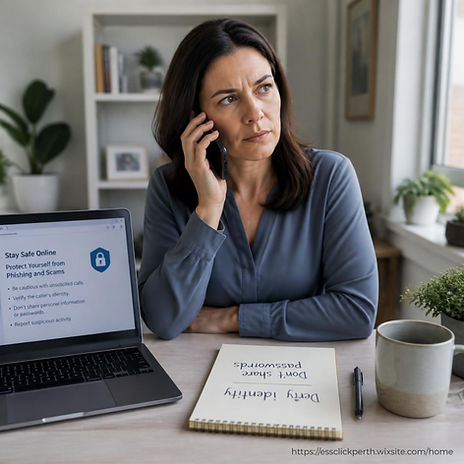
The telephone remains one of the most common tools scammers use — precisely because a real human voice feels more trustworthy than an email. This lesson covers how these calls typically work and how to protect yourself.
Common Vishing Scams Reported in Western Australia
Fake ATO calls claiming you owe unpaid tax and threatening arrest or fines unless you pay immediately, often via gift cards or bank transfer.
Fake "Microsoft" or "tech support" calls claiming your computer has a virus and asking for remote access to "fix" it — often actually installing malware or stealing information.
Fake bank fraud department calls claiming suspicious activity was detected and asking you to "confirm" your card number, PIN, or a one-time code sent to your phone.
Fake grandchild or relative in trouble calls, asking for urgent money transfers, often via a voice that sounds distressed or is deliberately unclear.
Fake Centrelink or MyGov calls requesting personal details to "process a payment" or "avoid suspension" of benefits.
Warning Signs During a Call
The caller creates urgency or fear ("act now or face consequences").
They ask you not to tell anyone else about the call.
They request payment via gift cards, cryptocurrency, or wire transfer — legitimate organisations never do this.
They ask you to read out a one-time PIN code sent to your phone.
Caller ID shows a number that looks official, but numbers can be easily faked ("spoofed").
How to Respond Safely
You are allowed to hang up. You don't owe a caller politeness if something feels wrong.
Don't confirm personal details over the phone unless you initiated the call yourself.
Verify independently. Call the organisation back using a number from an official bill, statement, or their website — not a number the caller gives you.
Talk to someone you trust before acting on any request involving money, especially if the caller has asked you to keep it secret.
Never grant remote access to your computer to an unsolicited caller, no matter how convincing they sound.
What Real Organisations Will and Won't Do
The ATO, Centrelink, and Australian banks will never ask you to pay a debt using gift cards, demand immediate payment over the phone under threat of arrest, or ask you to read out a one-time SMS code to "verify" your identity during an unexpected call.
Reporting a Scam Call
You can report scam calls to Scamwatch (scamwatch.gov.au) and, for telecommunications-related scams, to the Australian Communications and Media Authority. If you've lost money, contact your bank immediately and consider reporting to WA Police via the Police Assistance Line (131 444 for non-emergencies).
Sharing This Knowledge
Many scam calls specifically target older Australians, hoping for a trusting response. Sharing what you've learned here with friends, neighbours, or family members in your Perth community helps build a stronger collective defence against these calls.
Ess Click offers friendly, easy-to-understand lessons designed specifically for seniors to help identify scams, avoid online fraud, and build confidence with technology in a safe and non-intimidating way. If you or a loved one would like support learning how to recognise scam warning signs and stay protected online, please contact Ess Click to arrange a personalised lesson.



Comments